Executive Brief
Five Considerations for Turning Transparency into Value
Healthcare transparency is entering a new phase — one focused less on access to data and more on the application of data to improve affordability, network performance, and decision-making.


How prepared is your organization to operationalize price transparency data?
Explore these five considerations from our team of experts.
Transparency Only Matters When Data is Actionable
Price transparency alone does not lower costs. Meaningful impact comes from applying normalized, contextualized data to decisions such as contracting, network design, and member steerage.
Policy Momentum is Shifting Toward Usability
Regulatory focus is evolving from simply publishing data to making it usable. Increased enforcement, more frequent machine-readable file (MRF) updates, and proposed legislation such as the Patients Deserve Price Tags Act are accelerating that shift.
Rate Normalization is Essential for Accurate Comparisons
Hospital and payer files vary widely in structure, timing, and methodology. Organizations must normalize rates, such as comparing base rates versus all-in amounts, before benchmarking costs or making network decisions.
Site-of-Care Transparency is the Next Major Opportunity
Expanding transparency requirements to ambulatory surgery centers, labs, and imaging facilities could create greater opportunities for steerage to lower-cost settings and improve confidence in savings strategies.
Leading Organizations Combine Utilization and Pricing Intelligence
More mature transparency strategies pair utilization data with machine-readable file insights to support network negotiations, evaluate leased networks based on allowed amounts instead of discounts, and assess adequacy at both the market and provider levels.
Related Content
New ideas, proven best practices, and fresh perspectives for the healthcare ecosystem.
-

Five Medical Cost Trends to Watch in 2027
What will drive healthcare costs in 2027? Dr. Jigar Patel examines five trends reshaping the industry and explains why better data, earlier insights, and…
Read More -

Turning Transparency Data Chaos into Reimbursement Intelligence
Transparency data is transforming reimbursement strategy, but only when it can be trusted and applied effectively. Discover how Claritev turns complex pricing data into…
Read More -
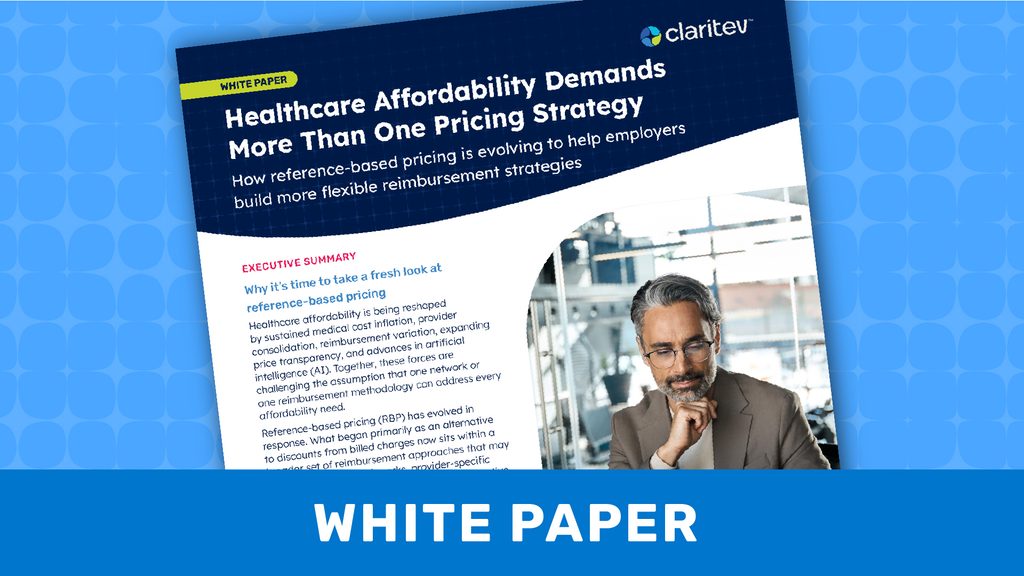
Rethinking Reference-Based Pricing
Reference-based pricing is evolving to meet the demands of rising healthcare costs, shifting market conditions and changing business priorities. This white paper explores how…
Read More